
 My oldest son is on the autism spectrum which brings him both challenges and unique skills, such as perfect pitch and encyclopedic memory. One of his gifts is an ability to see patterns that most of us miss. At least I do.
When my son is not doing homework, I often find him with a calculator and his red notebook. He experiments with graphs that create visual representations of words or names. This began with a simple formula he learned at school, but then he started to experiment with colors, rhythms, musical notes, random numbers and equations tapped out on the calculator. Continue reading
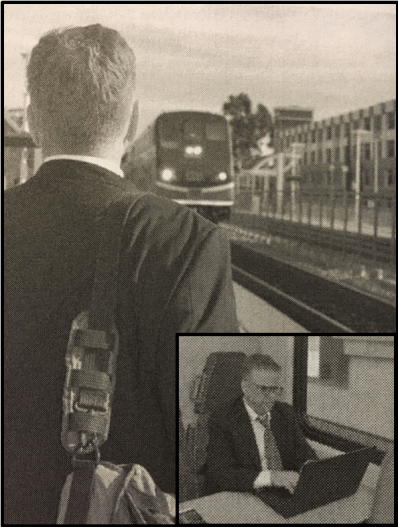 You may have seen him—the man on the commuter train to Los Angeles—leaning over his laptop, glasses slipping down his nose, wired in, absorbed, on deadline, not to be disturbed. Because he wears a suit and tie, you may assume he calculates quarterly sales results due on arrival downtown. It would be easy to make this mistake. The truth is he’s two thousand miles and forty years away.
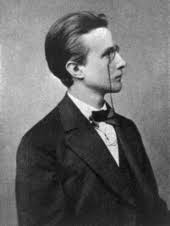 Consider for a moment the sorrows of Max Planck, the theoretical physicist who originated quantum theory. In 1909, his wife, Marie Merck, died of tuberculosis. In 1914, his son, Erwin, was taken prisoner by the French during the First World War. Then his eldest son, Karl, was killed in 1916 at the Battle of Verdun.
 At a recent library sale, I paid twenty-five cents for a new paperback copy of Milan Kundera’s novel,
  On November 4, 1979 radical Iranian students stormed the U.S. Embassy in Tehran, capturing 66 hostages who would not be free for 444 days. I was a Mormon missionary in New Mexico at the time. Twenty years old. This ominous event added to my list of reasons to expect to be drafted after my return home. The next spring, many missionaries were required to register for the draft. I missed the deadline by only a month. Life went on.
  We shared a birthday, my father and I, July twenty-fifth (1933 and 1959 respectively), and often celebrated with a trip to the Oregon coast. Just the two of us. We’d drive out from Portland on a Friday evening after dad finished work and spend a weekend. “We’re a couple of bums. That’s what we are,” dad would say. We slept in the roomy ’65 Chrysler and lived on cheese, saltines, apples, plums and summer sausage—the kind of food you can slice with a pocketknife and eat with your hands.
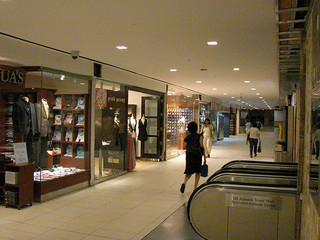 I keep travel notebooks, always have—writing more in three or four days than I write in six months at home. Being in motion lights me up. I have notebooks for Hong Kong, New Orleans, Vancouver BC, Mexico City, San Francisco, Taipei, Seattle, Chicago, Salzburg, New York City, Paris, Boston, Pittsburgh, Cleveland, Barcelona, Washington DC, Geneva, Baltimore, Atlanta, Philadelphia, Orlando, Rome, Santa Fe, Los Angeles, Portland, and others. It’s not only the big cities that grip me, I also take compulsive notes in places like Jerome, Idaho, or Alamogordo, New Mexico—it’s like a disease, I know. This may sound like a lot of travel, but the truth is, most of it is business travel—short trips spent mostly in trade show exhibits or conference rooms, staying in homogeneous hotels, waiting in airports, riding in taxis. I’m no seasoned global (or even domestic) traveler, not by a stretch. This is ordinary travel, outstripped ten-fold by a young sales executive or event planner.
 When he was ten years old, my son
 One Boy's Way of Knowing