Nickle Lauritzen and the Afterlife

Looking_good_in_a%20_hatIn 1990, my friend Nickle Lauritzen was diagnosed with Motor Neuron Disease, a rare form of Muscular Dystrophy, similar to Lou Gehrig’s Disease, a terminal disease that works inward from the extremities—first the hands, then feet, legs, and arms—muscle strength and control gradually failing until you fight for every breath and finally suffocate. Nickle would describe her predicament in just such harsh terms. She wanted the bare truth out there where she could keep an eye on it. “I know how I’m going to die,” she told me soon after we met, before I really understood her illness or knew her well at all. “I will wake up one moment unable to take another breath,” she said. “And that will be that.” Continue reading
Posted in Essays | Tagged , , , , , , , , | 78 Comments

Two Mornings in January

Morning superheros

Morning I

The cold snap this January makes it hard to wake up, our drafty 1961 house never quite warm enough. I’m too cold to relax except when in the shower or in bed. Cold or not, Colin still wakes most mornings at 7:30 A.M.—including weekends and holidays.

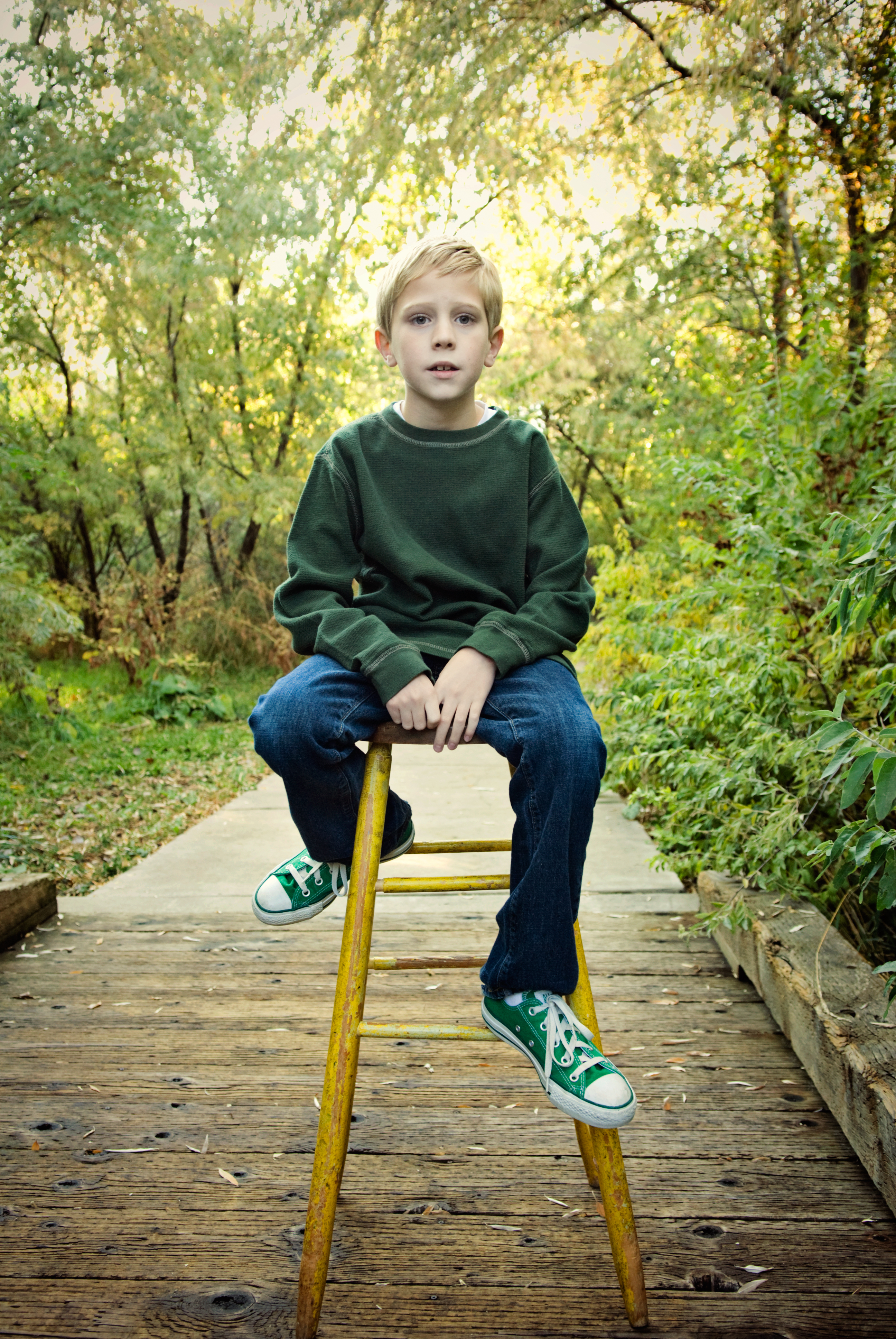
One morning this week I walk through the dark house thinking everyone, even Colin, could still be asleep. Then he appears in the next room, his blond hair and luminescent skin in the dark startles me at first. He could have been standing there for two seconds or an hour. He’s fully awake, a book in each hand, but all the lights are still out.

“Morning, dad,” he says with a hint of impatience as if he has been waiting hours for me, or anyone, to finally wake up. I turn on the kitchen light and he sits down at the table to read. He lets out a long breath.  Continue reading

Posted in Field Notes | Tagged , , , , , , , , | 3 Comments

Friends and Superheroes

Superheroes

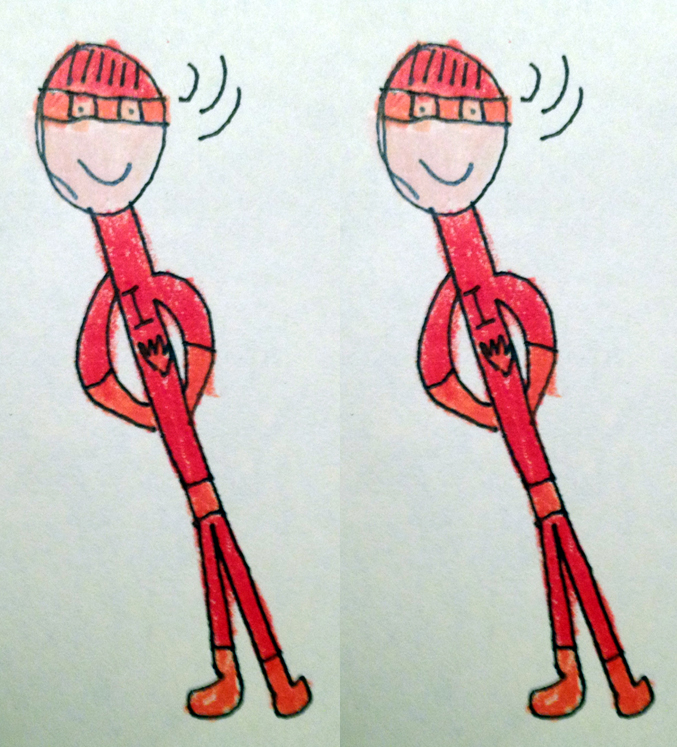
Colin loves to draw superheroes and talk about their high mission in the world “to fight for justice and peace, and the preservation of free will,” he says.  He often names the superheroes after real friends—Sadie, Jack, Emma, Carter, Elsa, Jake—adding words like “the great,” “invincible,” “mega,” “wizard,” “princess,” “turbo,” and “lightning.” Continue reading

Posted in Field Notes | Tagged , , , , | 1 Comment

List-o-mania

This gallery contains 8 photos.

My son Colin lists and catalogs whatever captivates him, filling homemade notebooks, backsides of school papers, and 3×5 index cards with scribbles, doodles, and written lists: Geometric shapes, colors, elements, candy bars (real or made up), book and movie titles, … Continue reading

More Galleries | Tagged , , , , , , , , | 2 Comments

Nemesis

Polio virusI admit to being in denial about autism as an epidemic, in spite of the tsunami of loud voices to the contrary— including expert-authored analyses in medical journals, countless magazine and newspaper articles, documentary films, TV specials, and memoirs. “Autism rates are exploding!” the alarm sounds, though opinions vary widely about what combination of environmental toxins or genetic predispositions are the cause or how much the increased numbers can be attributed to better diagnostic methods. Since our son’s diagnosis, the projected the rate of autism has more than doubled—going from 1-in-200 to 1-in-166 to 1-in-100. The National Institutes of Health puts the rate even higher at 1-in-88 and claims it affects one in 54 boys. Our immediate neighborhood mirrors these numbers, first there was only our son and a grown man I thought might be autistic, but within a year, three more young boys. At school “every classroom has a child on the spectrum somewhere,” the school district officials argued when we fought to get a classroom aide for our son. How was it that I had lived for 46 years with only the vaguest Rain Man notion of autism? I hadn’t recognized what I now see as autism in my own childhood friends. Few gave it a name back then, or they kept it close. Now there was no getting away from it. Continue reading

Posted in Essays | Tagged , , , , , , , | 3 Comments

At Work on a Self Portrait

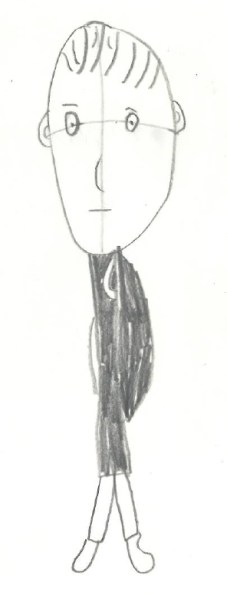
Colin has taken to drawing self portraits: simple sketches with lines on the face to align the proportions, bright wide-open eyes, a long body and short legs, and always a dark lump on one shoulder—his school backpack. To me this signals a stronger sense of an emerging self.

Another signal: Colin breaks a lifelong pattern of waking us when he wakes. Since his birth, Colin has served as the family alarm clock, a few mornings bursting into our dark room at four o’clock, flicking on all the lights—“Rise and shine!” I’m awake. You should be awake. The neighbors should be awake. The whole world should be awake. So one recent morning when he decided to break this pattern, the rest of us finally woke at 9:20, on a school day, a work day, caught entirely off guard, in a mad race to shower and dress. Colin was downstairs, reclining on the sofa, reading. Suddenly, we were responsible for ourselves again. And Colin was one step closer to his independent self. Continue reading

Posted in Field Notes | Tagged , , , | 1 Comment

We Have Become Travelers

In 2010, when my brother-in-law, John, died in a freak accident, I couldn’t push the accident out of my mind for more than a few hours at a time. Six, even eight months later, I still read and reread the police reports, traffic citations, eyewitness accounts, tributes, family emails, news stories, organ donor papers, and obituaries. I could not make peace with it. The one night I set aside each week to write I spent writing about the accident—arranging and rearranging the facts at hand, telling and retelling the story, as if I could reach a different ending.

Continue reading

Posted in Essays | Tagged , , , , , , | 3 Comments

At the Movies

During the cold months before and after Christmas, my wife works most weekends, and since I’m a typical male parent, I soon—very soon—run out of educational activities for the kids and opt instead for a Saturday matinee. Maura, not a big movie fan, doesn’t feel left out. So we—the boys and I—become regulars. The teenage girls at the ticket booth smile when they see us coming and stop asking me for I.D. They guess which movie we’re seeing. Both boys love it and we pass some fine afternoons together. But with Colin there are perils.

On the way in or out, Colin insists on studying every single movie poster in the theater: he scrutinizes the images and reads off names of actors and directors, and the reviews: “Dad, A must-see family extravaganza!” Or “Two thumbs up, way up!” Or taglines like: “You’ll never be the same after this!” Continue reading

Posted in Field Notes | Tagged , , , , , | 1 Comment

Planets, Moons, Planetoids and The Periodic Table of the Elements

Colin fills 3×5 index cards with imaginary planets, moons, and planetoids—the well-tooled cards hole-punched on one corner and clipped together with a plastic ring (no doubt his mother’s work). He presents the cards to me as a treasure. Flipping through more than forty names and descriptions, I see hints of Greek and Roman mythology, Star Wars, Narnia, Hayao Miyasaki films, Middle Earth, and, most of all, The Periodic Table of the Elements, this month’s obsession.   Continue reading

Posted in Field Notes | Tagged , , , | Leave a comment

Freak Business

Autistism and musicAt age nine, Colin has entered a volatile stage. Tears and tantrums come easily, often, and unexpectedly. He talks loud much of the time, all but shouting in typical conversions. He commands and interrupts. He ignores repeated requests, even pleas, to quiet down. Yet, this little powder keg of a boy sits with pure focus over a book or at the piano. He sings like an angel in the Salt Lake City Children’s Choir, his voice ringing out with the other voices at The Cathedral of the Madeleine, in tune with the harp and organ, his eyes wide at the applauding crowd, the echoes, vaulted ceilings, stained glass windows, and candles.   Continue reading

Posted in Field Notes | Tagged , , , , | 5 Comments